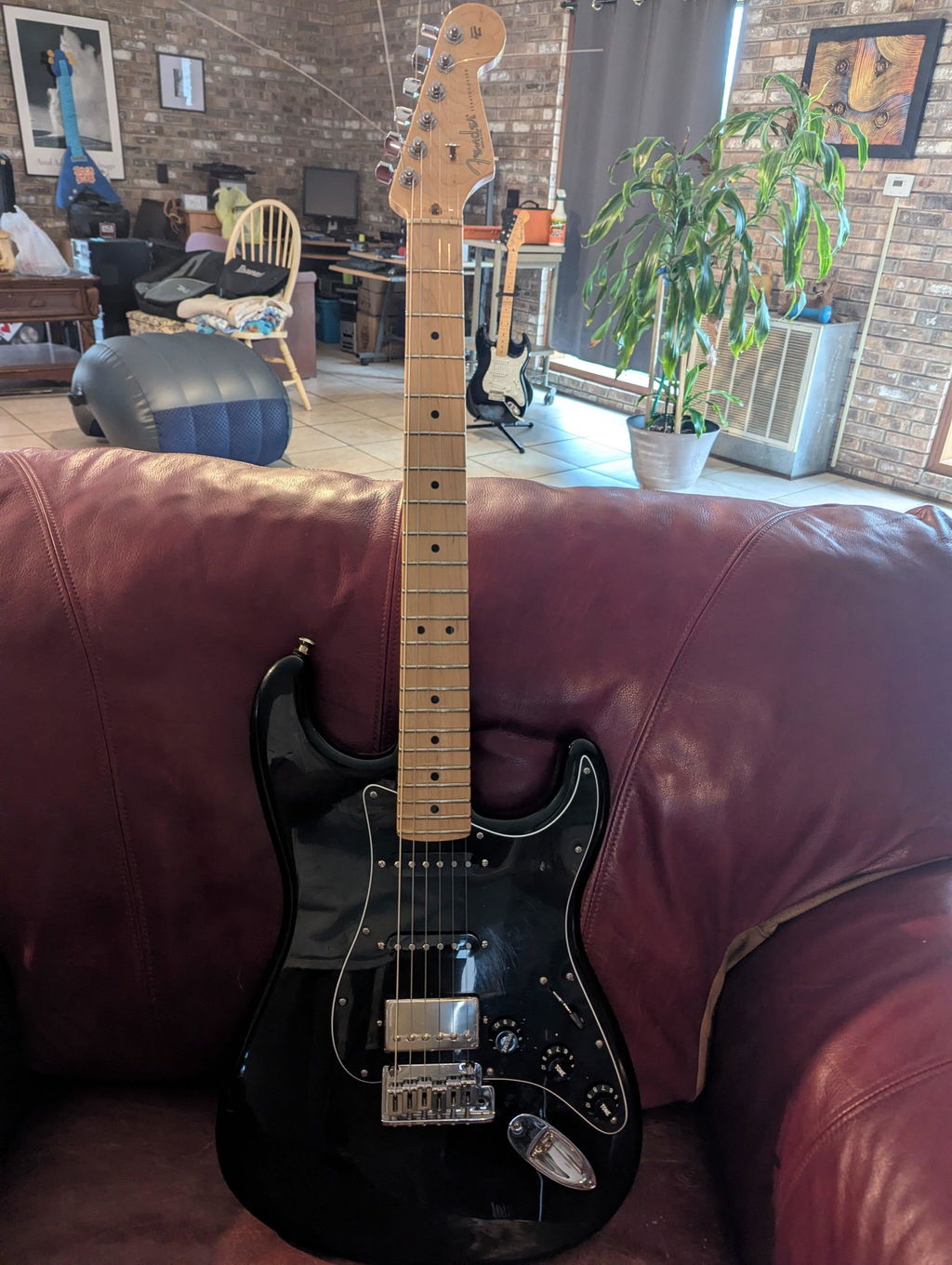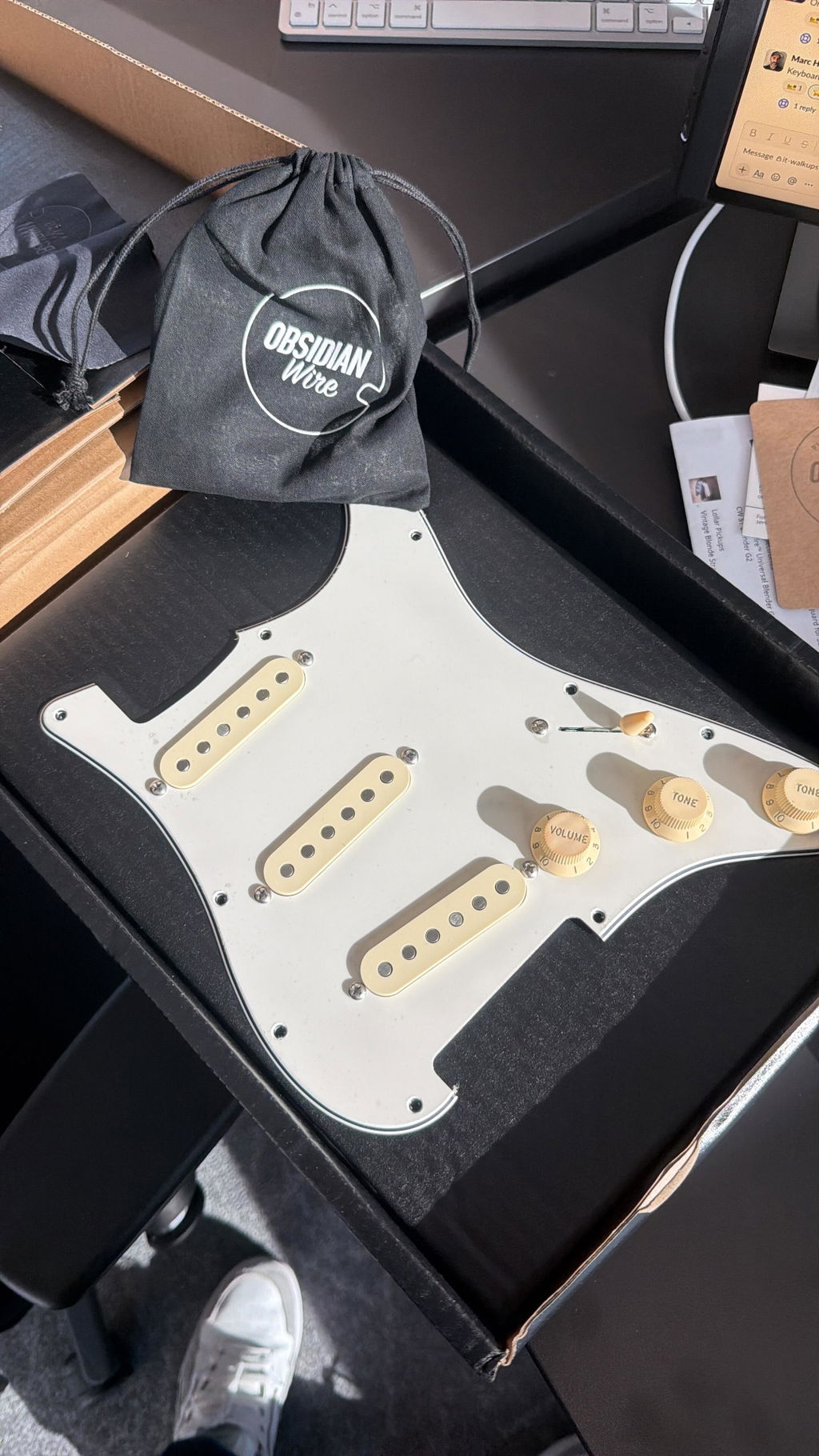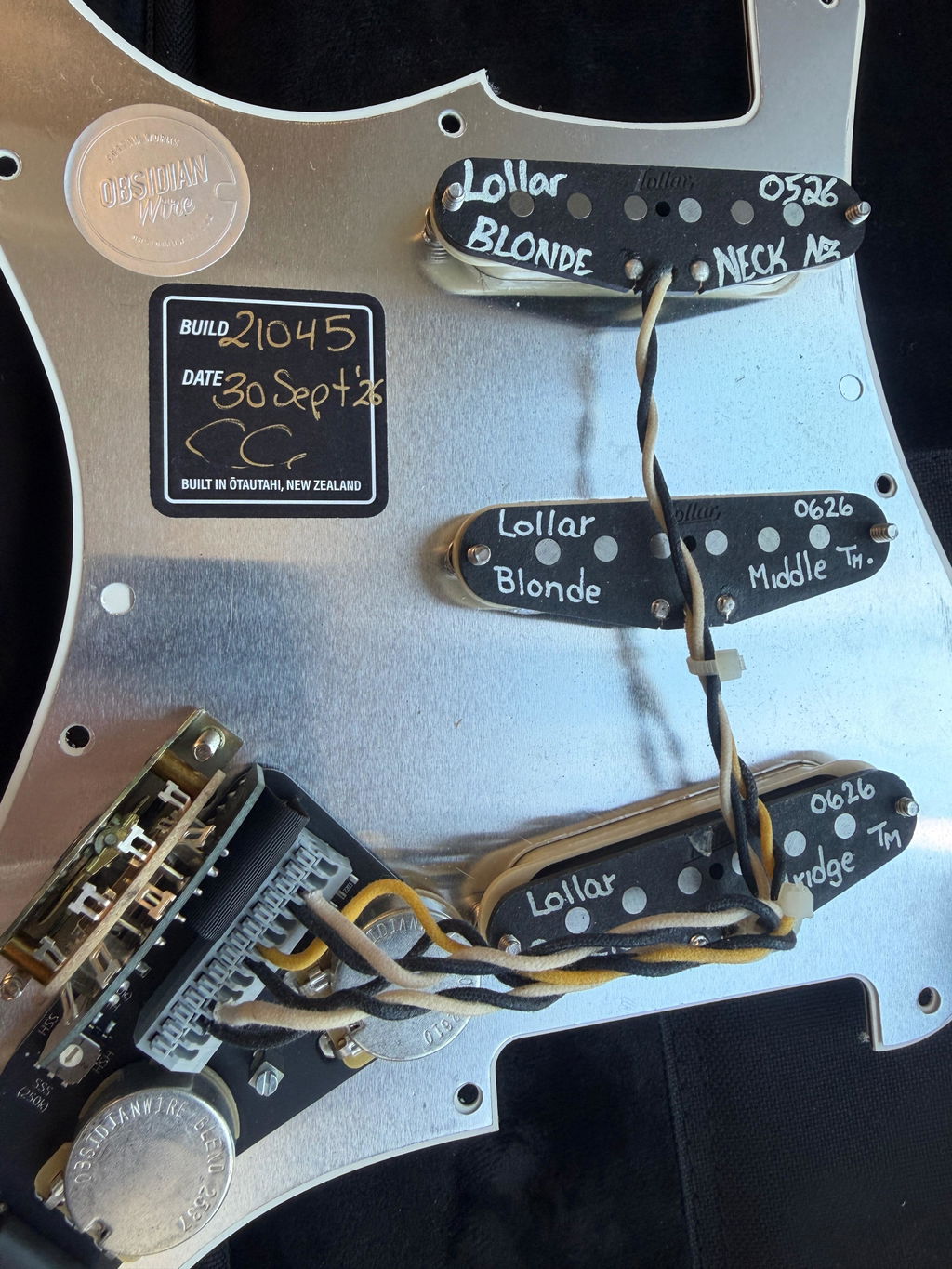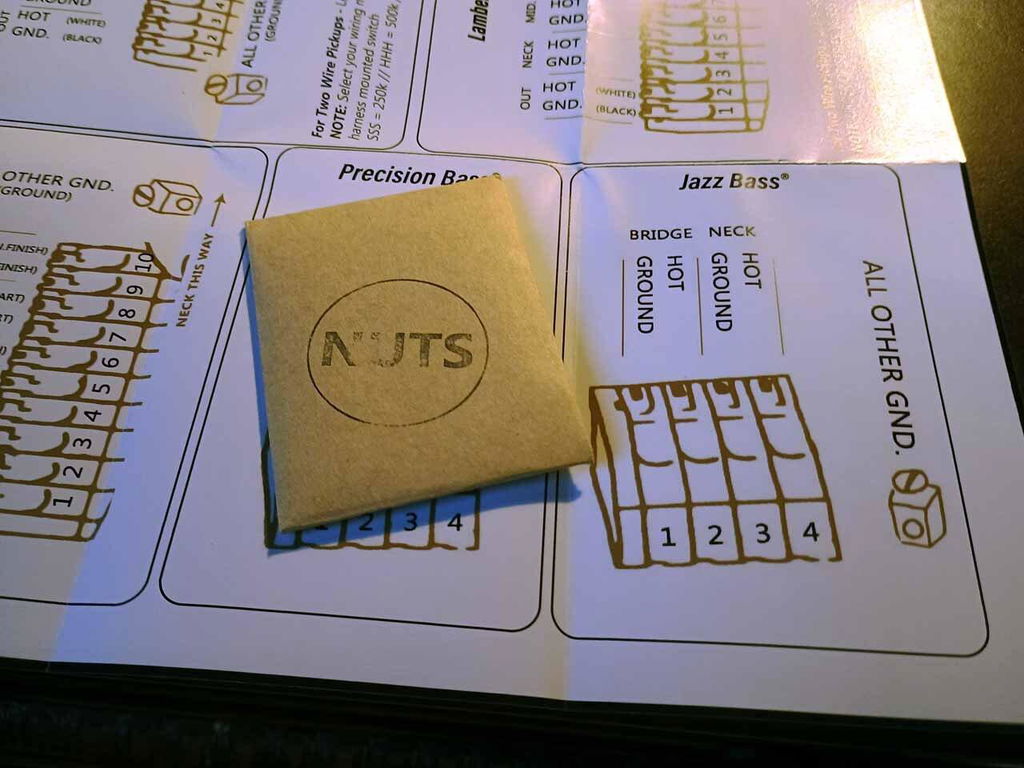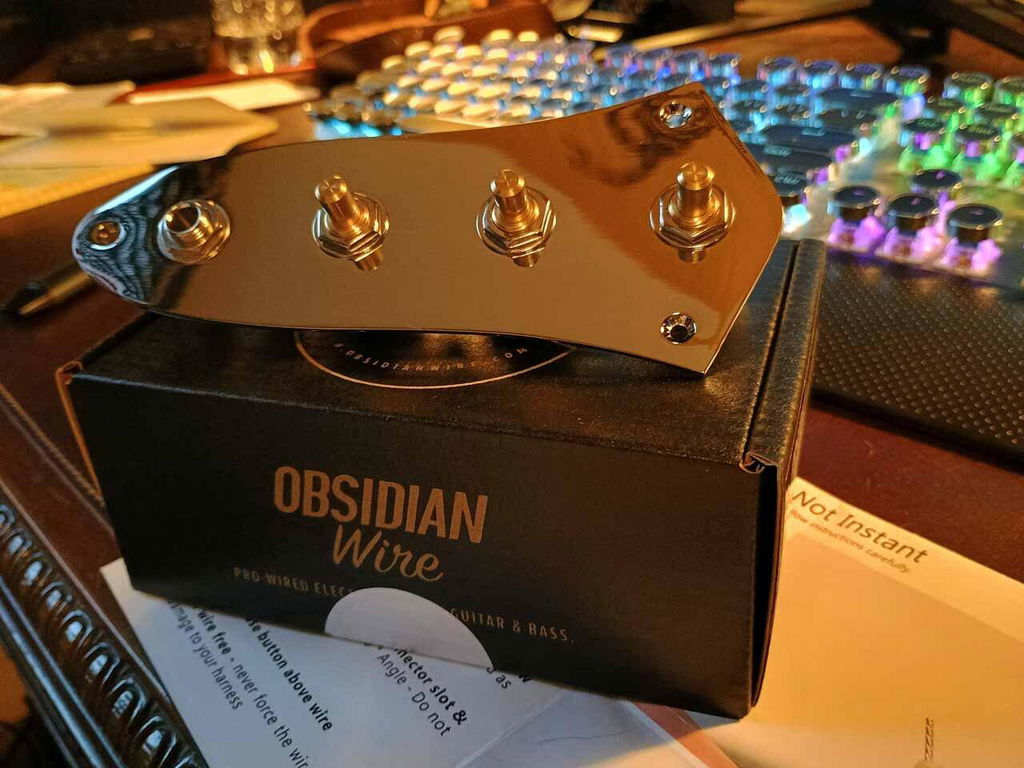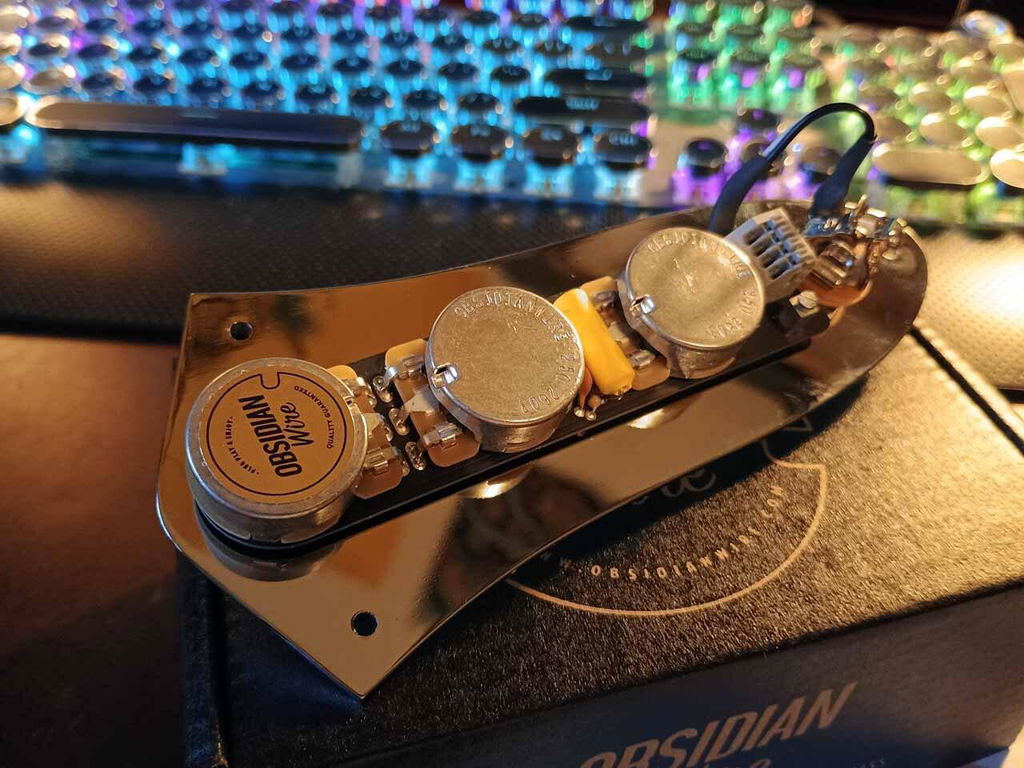

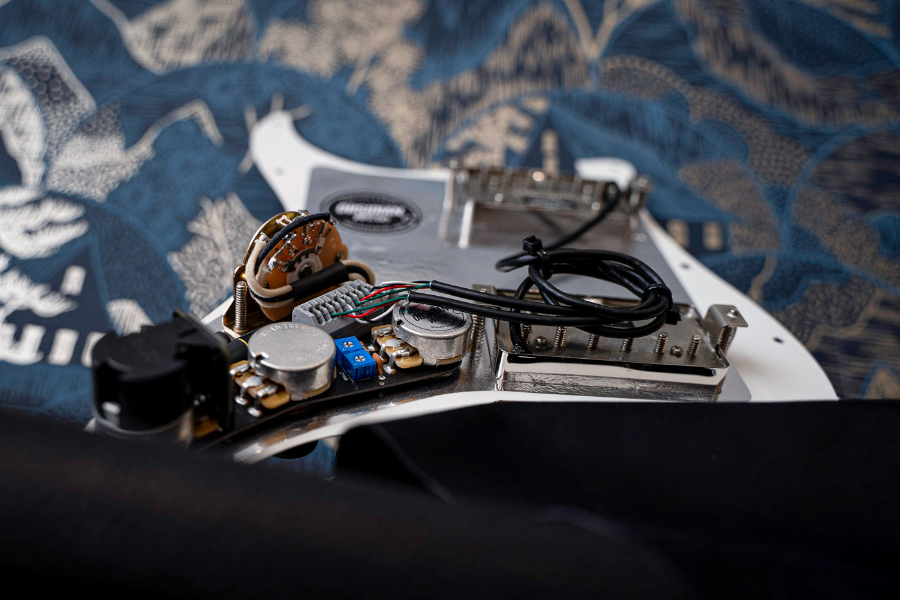
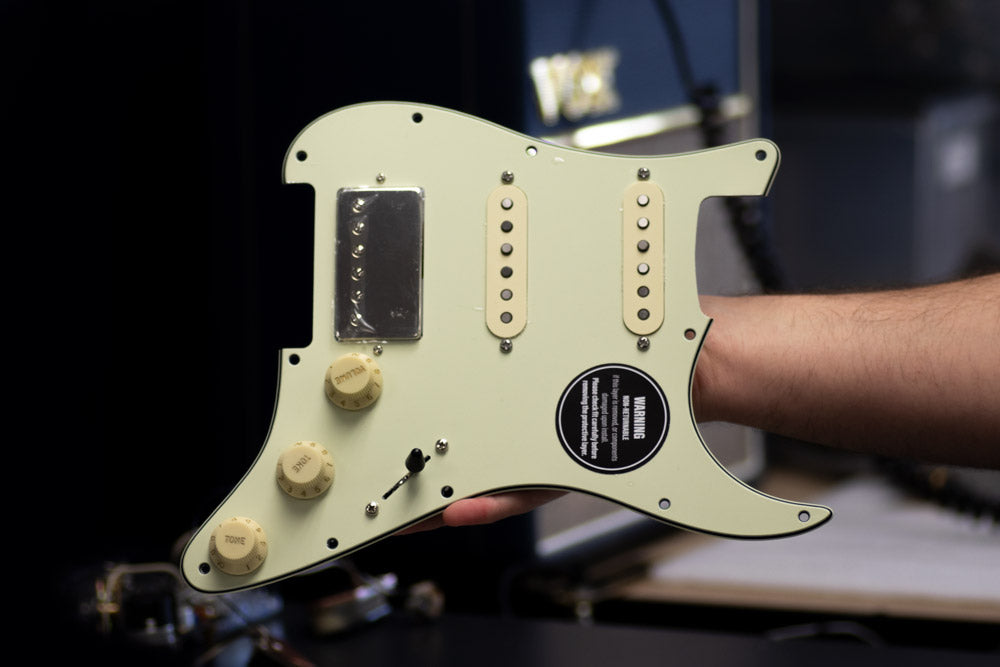
A fully loaded HH Stratocaster pickguard using an ObsidianWire Solder-less wiring harness

 ObsidianWire® - Install without Soldering

 Solderless Guitar & Bass Wiring 

ObsidianWire builds Solderless wiring systems for electric guitar and bass. Save the hassle and make the upgrade super easy.

Pickup Color Codes

Find pickup wire color codes for different pickup builders

Get Your New Pickups Installed - A Pickup Wiring Guide

Below you will find wiring info, and pickup color codes for the worlds most popular pickup builders.

Find wiring color codes for

  • Single Coils
  • Seymour Duncan
  • Lollar
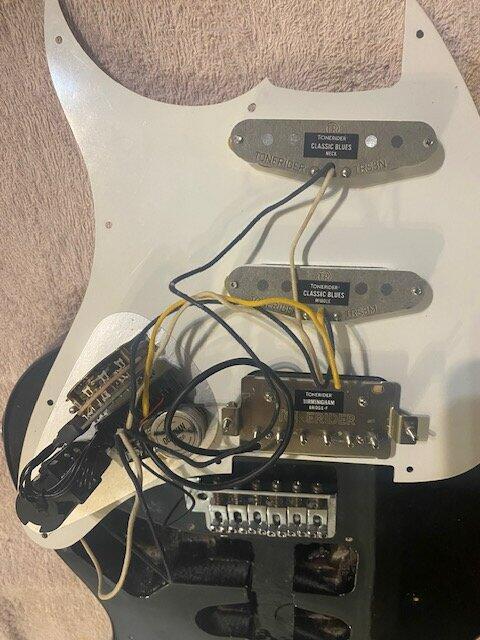
  • Tonerider
  • Gibson
  • Epiphone
  • Dimarzio
  • Mojotone
  • Fender
  • Barenuckle
  • Suhr

If your pickup builder is not included below, please check with the manufacturers install instructions.

Our Included 'Technical Terms' guide may also help you work out which wire is which. e.g 'North Start' is often a term used for the 'Hot' wire.

Single Coil  Pickups

  • VINTAGE / TWO WIRE

    • Hot = White / Yellow
    • Ground = Black
  • Fender N4 noiseless pickup wire color codes

    VINTAGE / THREE WIRE

    • Hot = White
    • Ground = Black
    • Sheild Ground = Green / Yellow - Send to spare ground slot
  • Fender N4 noiseless pickup wire color codes

    FENDER N4 & ULTRA NOISELESS

    • Hot = White / Blue / Red
    • Ground = Black
    • Sheild Ground = Green - Send to spare ground slot

Humbucker Colour Codes

  • FOUR WIRE - TECHNICAL TERMS

    • Hot = North Start
    • Ground = South Start
    • Series 1 = North Finish
    • Series 2 = South Finish
    • Bare Pickup Ground = Bare Wire

    To use humbuckers in single coil slots: Solder two 'series split' wires together, and tape them off so they do not ground out on anything. Send 'bare' wire to a spare ground slot, and use 'Hot' and 'Ground' wires as usual.

  • TWO WIRE

    • Hot = Inner Core
    • Ground = Outer Braid / Bare Wire

Seymour Duncan

  • Seymour Duncan pickup wire color code

    SEYMOUR DUNCAN

    • Hot = Black
    • Ground = Green
    • Series 1 = White
    • Series 2 = Red
    • Bare Pickup Ground = Bare

    To use in Single coil slots: Solder 'red and white' wires together, and tape them off so they do not ground out on anything.

    Send 'bare' wire to a spare ground slot, and use 'hot = black' and 'ground = green'.

Seymour Duncan, Tonerider & Lollar

  • Tonerider pickup wire color codes

    TONERIDER

    • Hot = Red
    • Ground = Green
    • Series 1 = Black
    • Series 2 = White
    • Bare Pickup Ground = Bare

    To use in Single coil slots: Solder 'black and white' wires together, and tape them off so they do not ground out on anything.

    Send 'bare' wire to a spare ground slot, and use 'hot = red' and 'ground = green'.

  • Seymour Duncan pickup wire color code

    LOLLAR

    • Hot = Black
    • Ground = Green
    • Series 1 = White
    • Series 2 = Red
    • Bare Pickup Ground = Bare

    To use in Single coil slots: Solder 'red and white' wires together, and tape them off so they do not ground out on anything.

    Send 'bare' wire to a spare ground slot, and use 'hot = black' and 'ground = green'.

Gibson, Ephiphone & Dimarzio

  • Gibson & Epiphone pickup wire color codes

    GIBSON & EPIPHONE

    • Hot = Red
    • Ground = Black
    • Series 1 = White
    • Series 2 = Green
    • Bare Pickup Ground = Bare

    To use in Single coil slots: Solder 'green and white' wires together, and tape them off so they do not ground out on anything.

    Send 'bare' wire to a spare ground slot, and use 'hot = red' and 'ground = black'.

  • Dimarzio pickup wire color codes

    DIMARZIO

    • Hot = Red
    • Ground = Green
    • Series 1 = Black
    • Series 2 = White
    • Bare Pickup Ground = Bare

    To use in Single coil slots: Solder 'black and white' wires together, and tape them off so they do not ground out on anything.

    Send 'bare' wire to a spare ground slot, and use 'hot = red' and 'ground = green'.

Fender & Mojotone

  • Fender pickup color codes

    FENDER

    • Hot = Green
    • Ground = Red
    • Series 1 = White
    • Series 2 = Black
    • Bare Pickup Ground = Bare

    To use in Single coil slots: Solder 'black & white' wires together, and tape them off so they do not ground out on anything.

    Send 'bare' wire to a spare ground slot, and use 'hot = green' and 'ground = red'.

  • Mojotone pickup wire color codes

    MOJOTONE

    • Hot = Black
    • Ground = Green
    • Series 1 = White
    • Series 2 = Red
    • Bare Pickup Ground = Bare

    To use in Single coil slots: Solder 'red and white' wires together, and tape them off so they do not ground out on anything.

    Send 'bare' wire to a spare ground slot, and use 'hot = black' and 'ground = green'.

Bareknuckle & Suhr

  • Bareknuckle pickup wire color codes

    BAREKNUCKLE

    • Hot = Red
    • Ground = Black
    • Series 1 = White
    • Series 2 = Green
    • Bare Pickup Ground = Bare

    To use in Single coil slots: Solder 'green and white' wires together, and tape them off so they do not ground out on anything.

    Send 'bare' wire to a spare ground slot, and use 'hot = red' and 'ground = black'.

  • Suhr pickup wire color codes

    SUHR

    • Hot = Black
    • Ground = Green
    • Series 1 = White
    • Series 2 = Red
    • Bare Pickup Ground = Bare

    To use in Single coil slots: Solder 'red and white' wires together, and tape them off so they do not ground out on anything.

    Send 'bare' wire to a spare ground slot, and use 'hot = black' and 'ground = green'.

PRS & GFS

  • PRS pickup wire color codes

    PRS

    • Hot = Black
    • Ground = White
    • Series 1 = Red
    • Series 2 = NONE
    • Bare Pickup Ground = Bare

    To use in Single coil slots: Tape off 'red' so it does not ground out on anything. Do not insert to harness.

    Send 'bare' wire to a spare ground slot, and use 'hot = black' and 'ground = white'.

  • GFS pickup wire color codes

    GFS

    • Hot = Green
    • Ground = Black
    • Series 1 = White
    • Series 2 = Red
    • Bare Pickup Ground = Bare

    To use in Single coil slots: Solder 'red & white' wires together, and tape them off so they do not ground out on anything.

    Send 'bare' wire to a spare ground slot, and use 'hot = green' and 'ground = black'.

Pickup Wiring Trouble Shooting: 

  • Out of Phase - Thin Nasal Sound

    Out-of-Phase Pickups

    If your guitar sounds thin, hollow, nasal or unusually quiet when two pickups are selected together, they may be out of phase.

    This can happen when combining pickups from different manufacturers, as there is no universal standard for pickup winding direction, magnetic polarity or wire colors. The pickups may work perfectly on their own but partially cancel each other when combined.

    How to check:


    Select each pickup individually and listen to its normal tone. Then select the combination of pickups that sounds thin or hollow. If the combined sound is significantly quieter or has much less bass than either pickup on its own, an out-of-phase condition is likely.

    How to fix it:


    For most pickups, reversing one of the pickup's hot and ground connections will correct electrical phase. 

    For an HSS setup, with phase issues in switch position 2: Bridge and Middle, we reccomend swapping the position of the hot and ground wires for the middle pickup, and then the same again for the neck pickup. 

    Grounding Issues: 

    this is not always possible with single-coil , or vintage replica pickups because the pickup's metal components may also be connected to ground. Reversing the wires can then introduce unwanted noise or create a ground connection where one is not intended.

    If you're unsure whether your pickups are compatible, check the pickup manufacturer's wiring instructions or contact us with your pickup model and wire colors before making changes.

    Contact Us
  • Pickup Ground Wires - Noise & Switching Issues

    Pickup Ground Wire Types

    At ObsidianWire, we consider pickup ground wires to fall into two categories. In traditional guitar wiring, these grounds can often be connected together without causing a problem. In more advanced wiring systems, it is important to keep them separate to ensure correct switching and minimise unwanted noise.

    Type 1 — Coil Ground

    This is the signal ground for the pickup. It connects one end of the pickup coil to ground, while the other end connects to the HOT side of the circuit.

    Examples include:

    • The black wire on many traditional single-coil pickups
    • The green wire on a standard Seymour Duncan humbucker

    On an ObsidianWire harness, this wire should always go to the pickup's GROUND slot on the main solderless terminal.

    This connection is part of the pickup's signal circuit and may be switched or manipulated by the harness during advanced pickup configurations.

    Type 2 — Shield Ground

    This wire grounds the pickup's metal components, such as a metal cover, baseplate or internal shielding. Its purpose is to prevent these components from acting as antennas and introducing unwanted electrical interference, hum or buzz into the guitar's signal.

    Examples include:

    • A separate ground wire on a Telecaster neck pickup (often green or yellow)
    • The bare shield wire found on many humbuckers
    • A dedicated cover or baseplate ground

    On an ObsidianWire harness, these wires should always go to the screw-down GROUND connector.

    Keeping the shield ground separate from the pickup's signal ground allows the harness to switch or manipulate the pickup signal without unintentionally switching its shielding or exposed metalwork.

    The Multi-Use Ground

    Many vintage-style pickups have a shared ground connection. This means the pickup coil ground and the ground for its metal parts are connected together internally and brought out through a single wire.

    This is common with:

    • Telecaster pickups
    • Vintage-style humbuckers
    • P-90s
    • Some pickups with metal covers or baseplates

    This is perfectly normal and works well with traditional guitar wiring. However, it can create problems when the pickup is used with an advanced wiring system that requires the coil ground and shield ground to remain electrically separate.

    For example, a pickup with a shared ground may not be suitable for certain coil-splitting, phase, series/parallel or other switching configurations without modification.

    How do I know which type of ground my pickup has?

    The best approach is to identify each wire using the pickup manufacturer's wiring diagram.

    If the manufacturer provides a separate wire for the pickup cover, baseplate or shielding, this is normally the Shield Ground.

    If the pickup only has a single ground wire and the metalwork is internally connected to it, it is likely a Multi-Use Ground.

    If you're unsure, check the manufacturer's wiring information or contact ObsidianWire with the pickup brand, model and wire colours before connecting the pickup to an advanced wiring harness.

A fully loaded HH Stratocaster pickguard using an ObsidianWire Solder-less wiring harness

Premium Solderless Guitar Wiring

About ObsidianWire®

ObsidianWire® makes premium, Pro-Wired &  solderless guitar wiring harnesses designed to make upgrading your guitar easier. From Stratocaster and Telecaster wiring to Les Paul and custom configurations, ObsidianWire combines quality components, clever circuit design and solderless installation to help guitarists 

Plug, Play & Enjoy™.

Find The Perfect Wiring Harness

Get a solderless wiring upgrade to match your new pickups

More Help?