
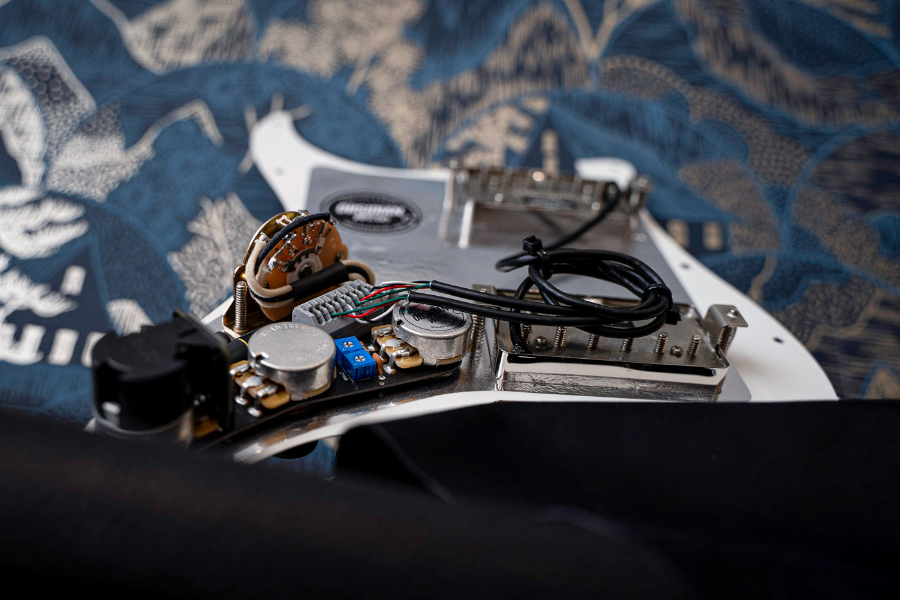

If you're replacing guitar pickups, rewiring a control cavity or building your own guitar electronics, you don't need an expensive industrial soldering station. But choosing the right soldering iron can make the difference between quick, clean connections and a frustrating afternoon of melted insulation, cold solder joints and overheated components.
For most guitar wiring jobs, a temperature-controlled soldering iron or soldering station in the 40–70 watt range is more than capable. A small-to-medium chisel or bevel tip is generally more useful than an extremely fine pointed tip, particularly when soldering to potentiometer cases and other larger metal surfaces.
However, the right soldering iron depends on what you're doing. Soldering a small pickup wire is different from soldering a ground wire to the back of a potentiometer.
And if you're looking to change pickups without soldering at all, ObsidianWire solderless guitar wiring provides an alternative worth considering.
Quick Answer: What Soldering Iron Is Best for Guitar Wiring?
For most guitarists, technicians and builders, look for:
- 40–70 watts of power
- Temperature control
- A small or medium chisel or bevel tip
- Adjustable temperature rather than a fixed-temperature iron
- A good-quality replaceable tip system
- Good thermal recovery when working on larger joints
A temperature-controlled soldering station is generally preferable to a cheap fixed-temperature soldering iron.
You don't necessarily need more power to make better guitar wiring connections. What matters is having enough thermal capacity to heat the joint quickly and then being able to control the temperature.
How Many Watts Should a Soldering Iron for Guitar Wiring Be?
For guitar electronics, 40–70 watts is a useful range.
A 20–30 watt iron can work for small electronic connections, but it can struggle when you're trying to solder to the back of a potentiometer or another relatively large metal surface.
A 40–70 watt temperature-controlled iron gives you considerably more thermal capacity without being excessive for normal guitar electronics.
| Iron Power | Typical Use | Guitar Wiring Suitability |
|---|---|---|
| 20–30 W | Small electronic work | Usable, but can struggle with pots and grounds |
| 40–50 W | General electronics | Very good |
| 60–70 W | General electronics and larger joints | Excellent |
| 80 W+ | Higher thermal-demand work | Useful, but unnecessary for most guitar wiring |
Remember that wattage is not the same thing as temperature.
A modern temperature-controlled 70 watt station isn't necessarily running hotter than a 30 watt iron. The extra power gives the iron greater ability to maintain its temperature when the joint draws heat away from the tip.
What Soldering Iron Temperature Should You Use for Guitar Wiring?
There isn't one universal temperature for every guitar wiring job because the ideal setting depends on the solder alloy, tip, joint and components involved.
As a general starting point:
- Leaded 60/40 or 63/37 solder: approximately 315–350°C
- Lead-free solder: typically requires a higher temperature
The important principle is to use enough heat to make the joint quickly rather than simply turning the iron up as high as possible.
Running an iron unnecessarily hot can oxidise tips more quickly and increases the risk of damaging pickup wire insulation, PCB pads, switches and potentiometers.
What Soldering Iron Tip Is Best for Guitar Wiring?
Tip selection is often overlooked.
For guitar wiring, an extremely fine needle tip isn't necessarily the best choice.
A small chisel or bevel tip often works better because it provides a useful contact area and transfers heat efficiently.
Different jobs benefit from different tip sizes.
| Job | Useful Tip Style |
|---|---|
| Pickup wires | Small fine chisel or bevel |
| Switch terminals | Small chisel or bevel |
| Potentiometer lugs | Small-to-medium chisel |
| Grounding to pot casing | Medium chisel or bevel |
| Output jack | Small-to-medium chisel |
| PCB connections | Small fine tip |
The tip needs to be large enough to transfer heat efficiently but small enough to avoid contacting neighbouring components.
What Soldering Iron Do You Need for Guitar Pickups?
Soldering guitar pickups requires a little more care than some other guitar wiring jobs.
Pickup wires can be extremely small, particularly on vintage-style pickups. Excessive heat can damage insulation or the fine wire connection inside the pickup.
For pickup work, a temperature-controlled iron with a relatively small tip is ideal.
A good approach is:
- Prepare and strip the wire carefully.
- Keep the exposed conductor as short as practical.
- Tin the wire with a small amount of solder.
- Prepare the terminal or connection point.
- Heat the connection quickly.
- Allow the solder to flow properly.
- Remove the iron as soon as the joint is complete.
Don't use excessive heat simply because the solder isn't flowing immediately. If a joint is taking too long, check your tip condition, tip size, contact area and whether the surfaces are clean.
Why Does My Soldering Iron Struggle to Solder Guitar Pots?
This is one of the most common problems encountered when wiring guitars.
The back of a potentiometer is a relatively large piece of metal. It can absorb a significant amount of heat.
A small, low-powered soldering iron can struggle to heat the surface sufficiently, resulting in:
- Solder that refuses to flow
- Cold or dull solder joints
- Long heating times
- Melted wire insulation
- Potentially damaged components
The solution isn't necessarily to turn the iron temperature dramatically higher.
A better approach is to use a suitable tip with sufficient thermal mass and enough power to heat the joint quickly.
Clean the surface, use appropriate flux if required, heat the work and then apply solder to the heated joint.
Do You Need a Soldering Station for Guitar Wiring?
No, you don't strictly need a professional soldering station.
However, a temperature-controlled station is a worthwhile investment if you regularly work on guitars.
A good station provides:
- Adjustable temperature
- Consistent heat
- Better thermal recovery
- Interchangeable tips
- More predictable soldering
- Better control when working with delicate components
If you're only going to solder one pickup into one guitar, an inexpensive quality iron may be sufficient.
If you're a guitar technician, builder, pickup maker or serious DIY enthusiast, a proper temperature-controlled station becomes much easier to justify.
What Should You Look for in a Guitar Soldering Iron?
Temperature control
Adjustable temperature is one of the most useful features.
It allows you to use an appropriate temperature for different solder alloys and components rather than relying on a fixed-temperature iron.
Good thermal recovery
Thermal recovery is particularly important when soldering larger connections such as pot casings.
A good iron should recover its operating temperature quickly after heat is transferred into the joint.
Replaceable tips
Being able to change tip shape and size makes the soldering iron much more versatile.
Comfortable handpiece
If you're working on guitars regularly, ergonomics matter.
A lightweight handpiece and flexible cable can make a surprisingly large difference during long wiring sessions.
Reliable temperature regulation
A displayed temperature isn't particularly useful if the actual tip temperature fluctuates significantly.
For regular professional work, a reputable soldering station is generally a better investment than a very cheap iron with a large wattage number printed on the box.
General Guitar Wiring Soldering Tips
1. Keep the Soldering Iron Tip Clean
A clean and lightly tinned tip transfers heat much more effectively than an oxidised, dirty tip.
Clean the tip regularly and keep a small amount of solder on it when appropriate.
2. Heat the Joint, Not the Solder
Place the tip so it heats the components being joined.
Then apply solder to the heated joint.
Don't simply melt solder onto the iron and try to deposit it onto a cold connection.
3. Use Enough Heat, But Don't Cook the Components
A good solder joint should normally happen quickly once everything is properly prepared.
If you're holding the iron on a pickup connection for 10–15 seconds, something probably needs to change.
Check:
- Tip cleanliness
- Tip size
- Iron power
- Temperature
- Flux
- Surface cleanliness
4. Tin Wires Before Making the Final Connection
Tinning stranded wire keeps the individual strands together and makes it considerably easier to produce a neat connection.
5. Don't Use Too Much Solder
A large blob of solder doesn't make a connection more reliable.
Use enough solder to properly wet the joint without creating unnecessary bulk.
6. Make the Joint Mechanically Secure
Where practical, arrange the wire so that it is mechanically supported before soldering.
Solder should provide the electrical connection rather than being solely responsible for physically holding the wire in place.
7. Test Before Reassembling the Guitar
Before reinstalling the pickguard or closing the control cavity, test:
- Every pickup position
- Volume controls
- Tone controls
- Switches
- Push-pull functions
- Output signal
- Grounding and unwanted noise
Finding a wiring problem while everything is still accessible is considerably easier than discovering it after the guitar has been completely reassembled.
Do You Need a Soldering Iron to Change Guitar Pickups?
Not necessarily.
Traditional guitar wiring normally requires you to solder and desolder pickup connections whenever you replace a pickup.
That means opening the control cavity, identifying the pickup wires, desoldering the old pickup, preparing the new pickup wires and soldering everything back together.
For guitarists who frequently experiment with pickups, this can become repetitive.
This is one of the problems that solderless guitar wiring is designed to solve.
Change Guitar Pickups Without Soldering
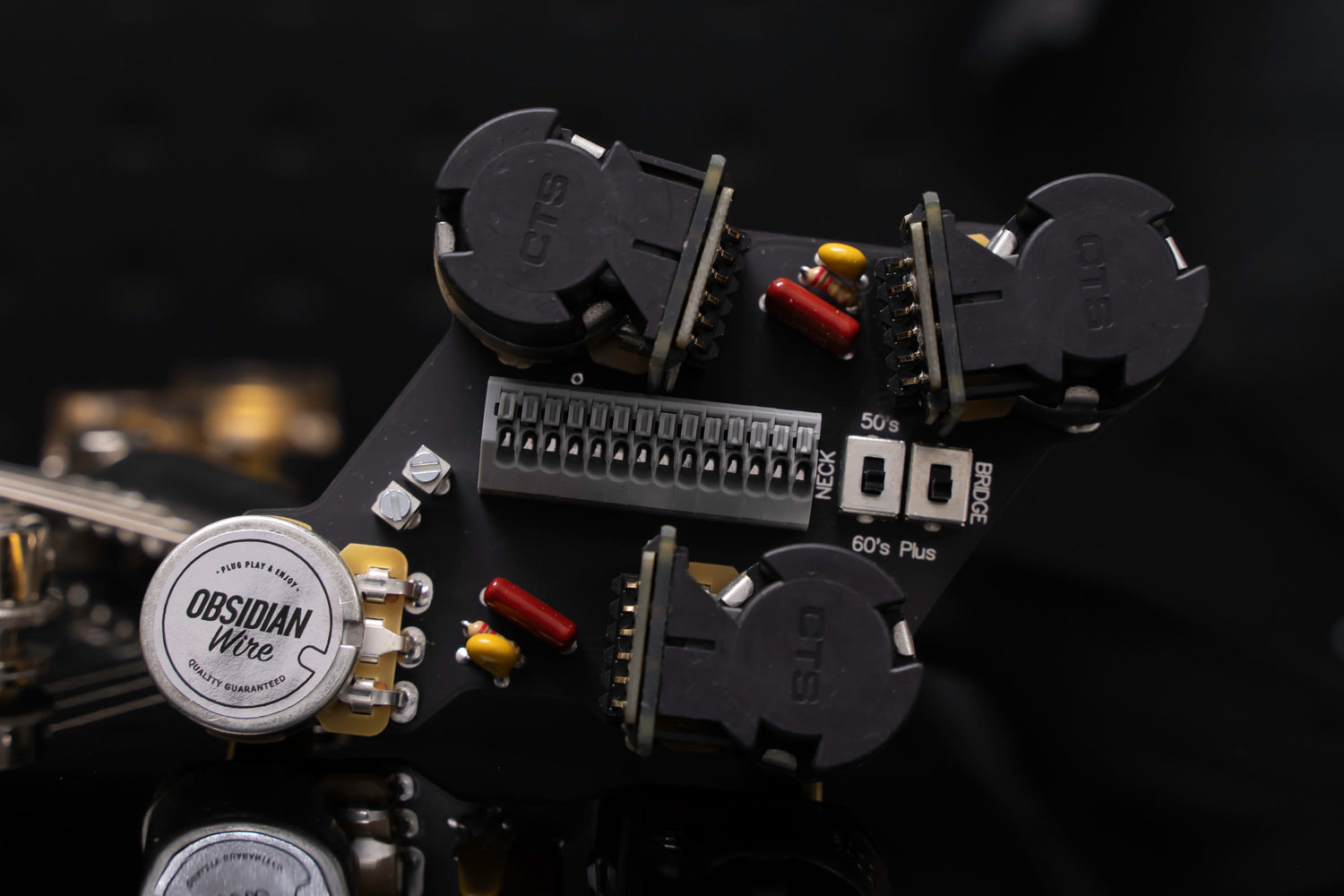
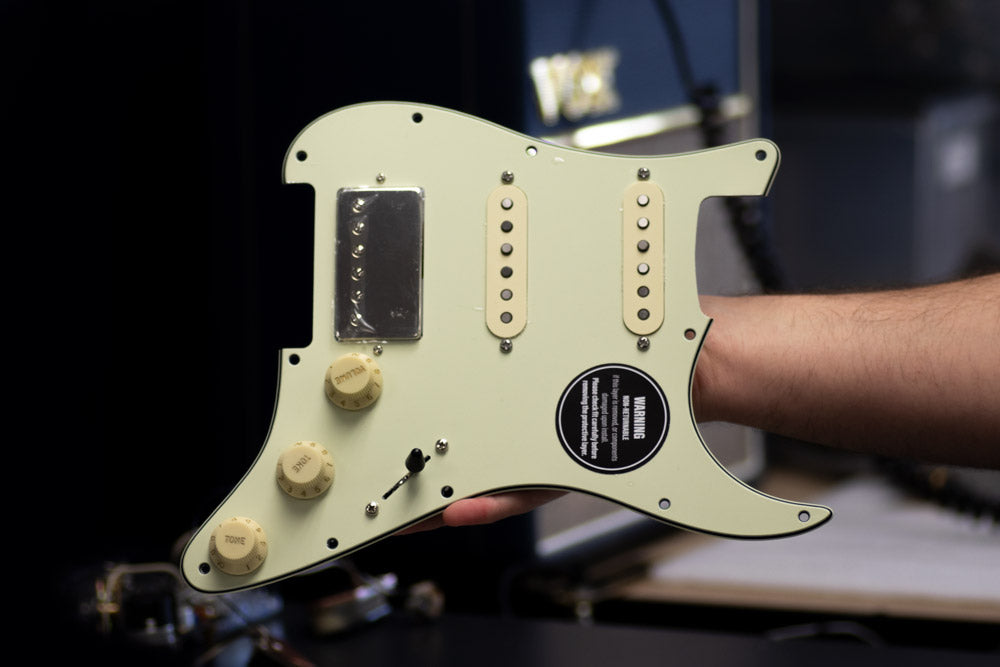
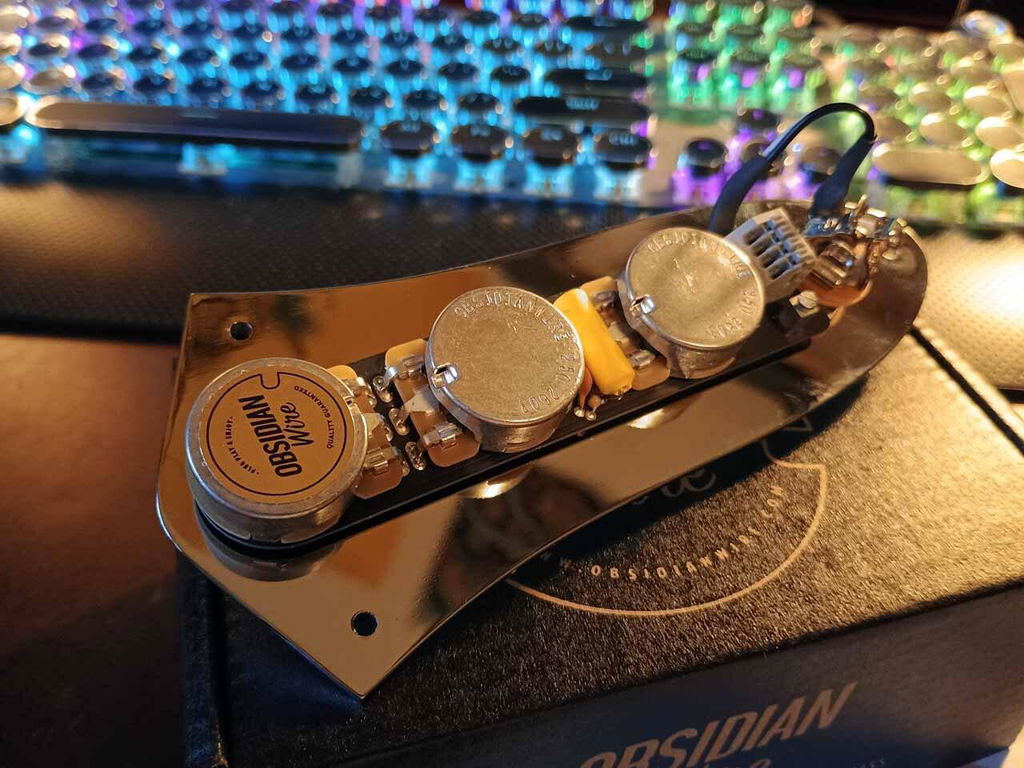
ObsidianWire solderless wiring harnesses allow compatible pickups to be connected without soldering the pickup connections.
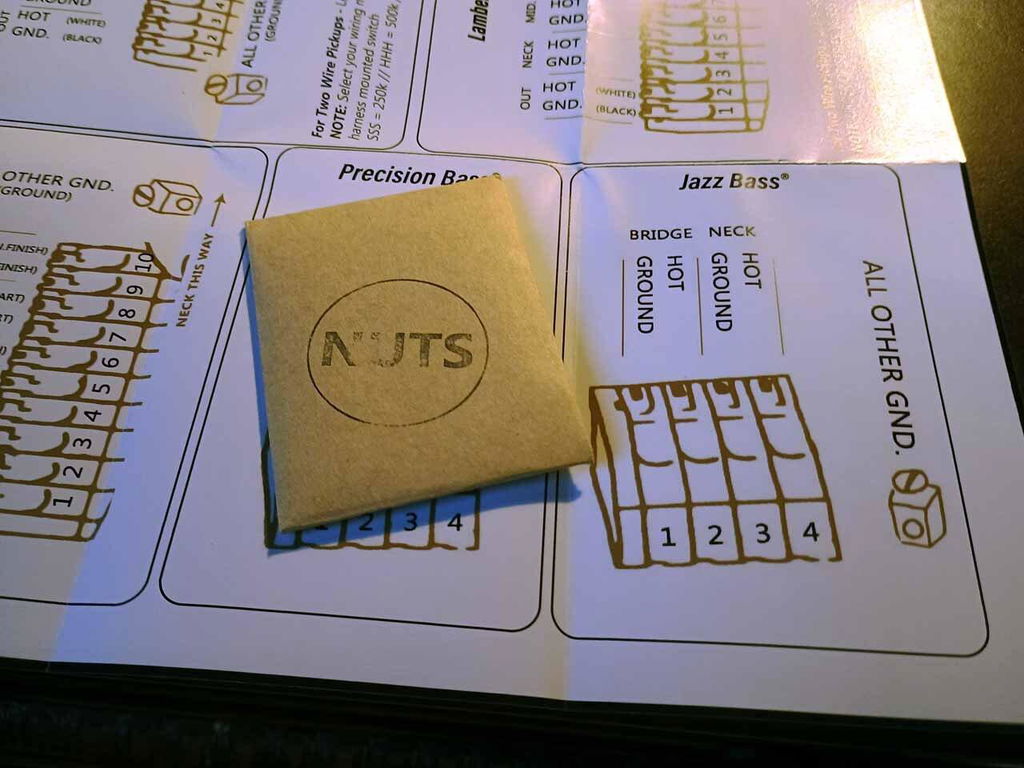
Instead of repeatedly soldering and desoldering pickup wires, the pickup connects to the harness using ObsidianWire's purpose-designed connector system.
This can be particularly useful for:
- Guitarists who experiment with different pickups
- Guitar technicians performing regular pickup changes
- Guitar builders assembling multiple instruments
- Players who don't own a soldering iron
- Players who aren't confident with soldering
- Anyone who wants to make future pickup changes easier
Once the solderless harness is installed, compatible pickup changes can be made without repeatedly heating the potentiometers, switches and pickup wires inside the guitar.
Explore ObsidianWire Solderless Guitar Wiring →
Traditional Wiring vs Solderless Pickup Changes
| Traditional Wiring | ObsidianWire Solderless | |
|---|---|---|
| Initial installation | Requires soldering | Professionally assembled harness |
| Changing compatible pickups | Desolder and resolder | Connect using the solderless system |
| Custom one-off circuits | Very flexible | Depends on available configuration |
| Repeated pickup experimentation | Requires repeated soldering | Designed to simplify compatible pickup changes |
| Soldering skills required | Yes | Not for compatible pickup connections |
| Future modifications | Requires soldering | Compatible solderless upgrades available |
Traditional soldered wiring remains an excellent choice for custom guitar electronics and one-off modifications.
Solderless wiring offers a different advantage: making compatible pickup changes and electronics upgrades easier in the future.
What About Pickup Builders and Guitar Technicians?
For pickup builders and professional guitar technicians, a good soldering station remains an important workshop tool.
Pickup construction, repairs and custom wiring all require precise soldering techniques, and a temperature-controlled iron gives you the control needed for delicate connections.
At the same time, a solderless harness can make sense when the goal is to install a repeatable, professionally assembled control system that allows customers or technicians to change compatible pickups more easily.
This can be particularly useful for builders who want to offer guitars with flexible pickup configurations without requiring future soldering work for every compatible pickup change.
What Is the Best Soldering Iron for Guitar Wiring?
For most guitarists, the ideal soldering iron isn't necessarily the most powerful or expensive model.
Look for a 40–70 watt temperature-controlled soldering iron or station with interchangeable tips and good thermal recovery.
A small chisel or bevel tip will cover most guitar wiring jobs, while a smaller tip can be useful for delicate pickup connections.
If you're doing occasional DIY guitar wiring, a good entry-level temperature-controlled iron is likely all you need.
If you're a technician, guitar builder or pickup manufacturer, investing in a quality soldering station is much easier to justify.
And if your primary reason for buying a soldering iron is simply to change pickups, there's another option:
You may not need to solder your pickups at all.
With a compatible ObsidianWire solderless harness, future pickup changes can be made without repeatedly soldering and desoldering the guitar's electronics.
Shop ObsidianWire Solderless Guitar Wiring →
Frequently Asked Questions
What soldering iron is best for guitar wiring?
A temperature-controlled soldering iron or station in the 40–70 watt range is suitable for most guitar wiring. A small or medium chisel or bevel tip is useful for most connections.
What soldering iron do I need for guitar pickups?
A temperature-controlled iron with a relatively small tip is ideal. Pickup wires can be delicate, so controlled temperature and short heating times are more important than simply having a high-powered iron.
How many watts should a soldering iron be for guitar wiring?
Approximately 40–70 watts is a useful range for most guitar wiring. More power provides better thermal recovery, particularly when soldering to larger surfaces such as potentiometer cases.
What temperature should I use for guitar wiring?
For conventional 60/40 or 63/37 leaded electronics solder, approximately 315–350°C is a useful starting range. Lead-free solder generally requires a higher temperature.
Can you solder guitar pickups with a 25 watt iron?
Yes, a 25 watt iron can solder small pickup connections, but it may struggle with larger connections such as potentiometer casings. A temperature-controlled iron with greater thermal capacity is generally more versatile.
Do I need a soldering iron to change guitar pickups?
Not necessarily. Traditional guitar wiring requires soldering, but compatible ObsidianWire solderless harnesses allow pickup connections to be changed without repeatedly soldering the pickup wires.
Can I change guitar pickups without soldering?
Yes, with a compatible solderless wiring system. ObsidianWire solderless harnesses are designed to allow compatible pickups to be connected without traditional soldering.
Is solderless guitar wiring reliable?
A properly designed and installed solderless system can provide a reliable electrical connection. ObsidianWire harnesses are professionally assembled and use purpose-designed connectors and quality guitar electronics.
What size soldering iron tip should I use for guitar wiring?
A small-to-medium chisel or bevel tip is a good general-purpose choice. Smaller tips are useful for delicate pickup wires, while a larger tip can transfer heat more effectively to potentiometer casings.