
Solderless Telecaster Wiring: 3-Way, 4-Way & 7-Way Explained

Solderless Telecaster Wiring: 3-Way, 4-Way & 7-Way Explained

Upgrade your Telecaster without soldering

A Telecaster doesn't need complicated electronics to sound great.

But changing pickups, upgrading the controls or adding more switching options traditionally means reaching for a soldering iron.

Solderless Telecaster wiring changes that.

A solderless wiring harness replaces many of the conventional solder connections with purpose-designed connectors, allowing compatible pickups and electronics to be installed without soldering.

That makes upgrading your Telecaster easier — and future pickup changes much simpler.

But solderless doesn't have to mean basic.

Modern Telecaster wiring can give you everything from traditional 3-way switching to 4-way series wiring, 7-way pickup combinations and humbucker-optimised circuits.

Vintage 3-Way Custom 4-Way Nashville 7-Way Universal
Traditional Tele sounds Yes Yes Yes Yes
Pickup configuration SS SS SSS SS / HS / SH / HH
Additional switching Series Neck pickup on Pickup-dependent
Series / humbucker mode No Yes No Optional coil split
Solderless installation Yes Yes Yes Yes
Best suited to Traditional Tele More output & versatility Maximum single-coil combinations Custom pickup setups

What is solderless Telecaster wiring?

Traditional guitar wiring uses solder to connect pickups, controls, switches and the output jack.

A solderless wiring harness uses connectors instead.

The harness is professionally assembled beforehand, while the pickup and other connections are made using the appropriate connectors or grounding points.

The result is a cleaner and more repeatable installation without requiring you to solder the entire circuit yourself.

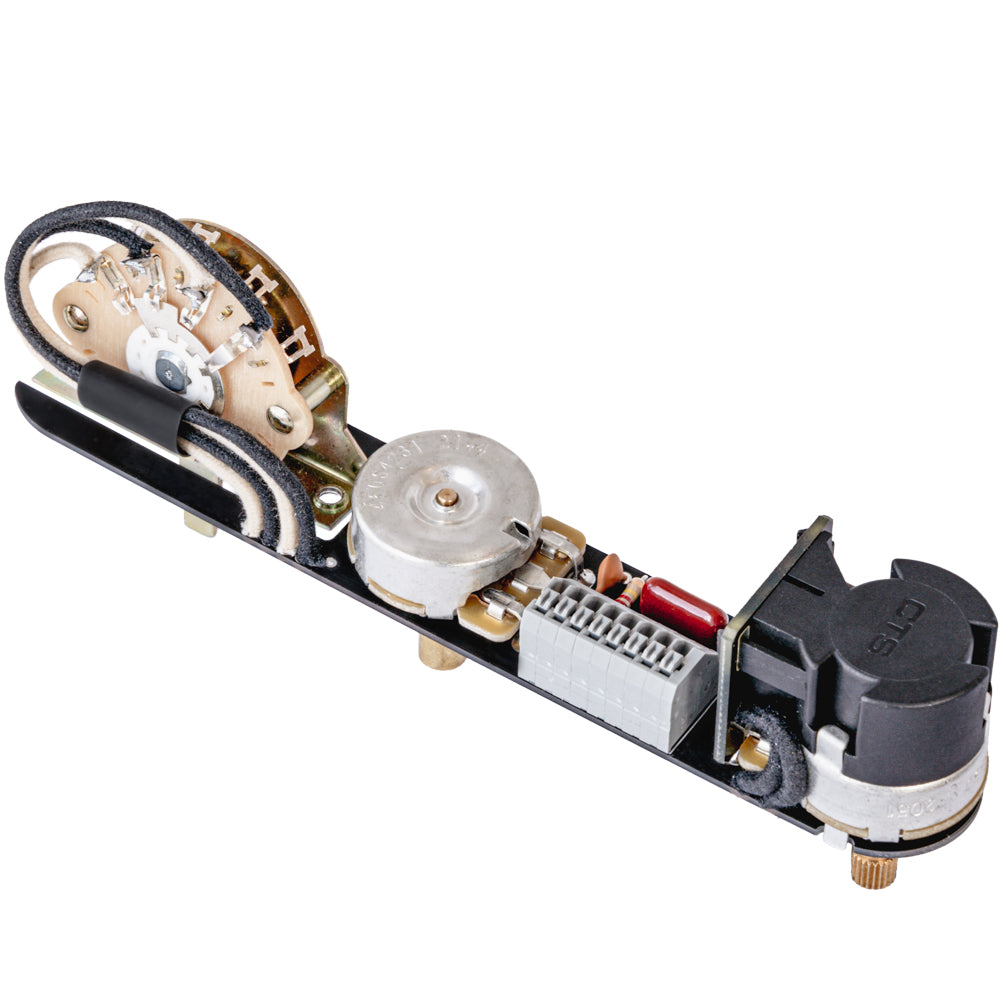
With a compatible ObsidianWire Telecaster harness, you can install the electronics, connect your pickups and get playing without soldering the main wiring circuit.

And when you want to change compatible pickups later, the process can be considerably easier.

Why upgrade a Telecaster wiring harness?

A Telecaster already has a relatively simple circuit.

So why replace it?

There are several reasons.

Easier pickup changes

Traditional Tele wiring usually means soldering the pickup wires every time you change pickups.

A solderless harness can turn a future pickup swap into a much simpler connection process.

Easier installation

You don't need to build the entire circuit from individual components.

The harness arrives professionally assembled and ready to install.

More switching options

A wiring upgrade can also change what the Telecaster can do.

Depending on the harness, you can add:

  • Series pickup combinations
  • Additional pickup combinations
  • Humbucker optimisation
  • Coil splitting
  • Treble bleed
  • Smoother control response

Professionally assembled electronics

The quality of a wiring harness isn't just about the circuit diagram.

Components, assembly, solder joints, grounding, pot values and control taper can all affect the finished result.

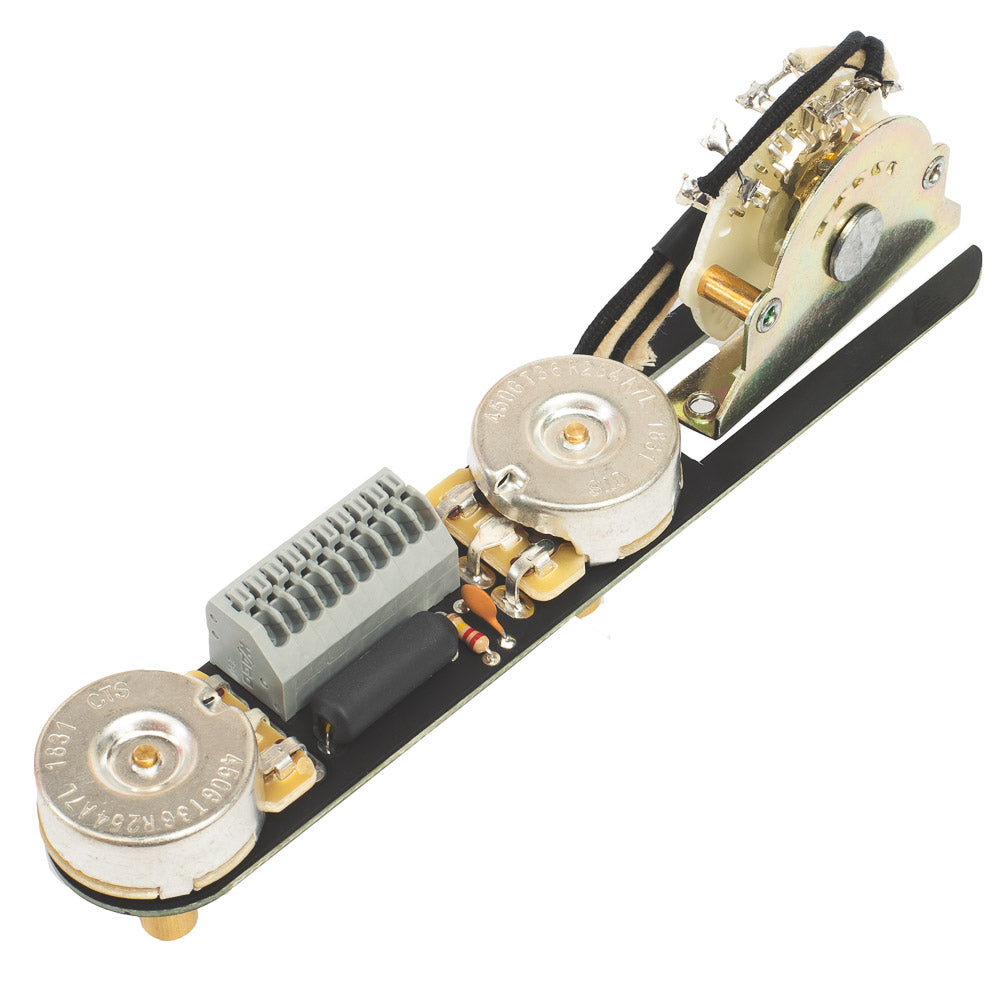
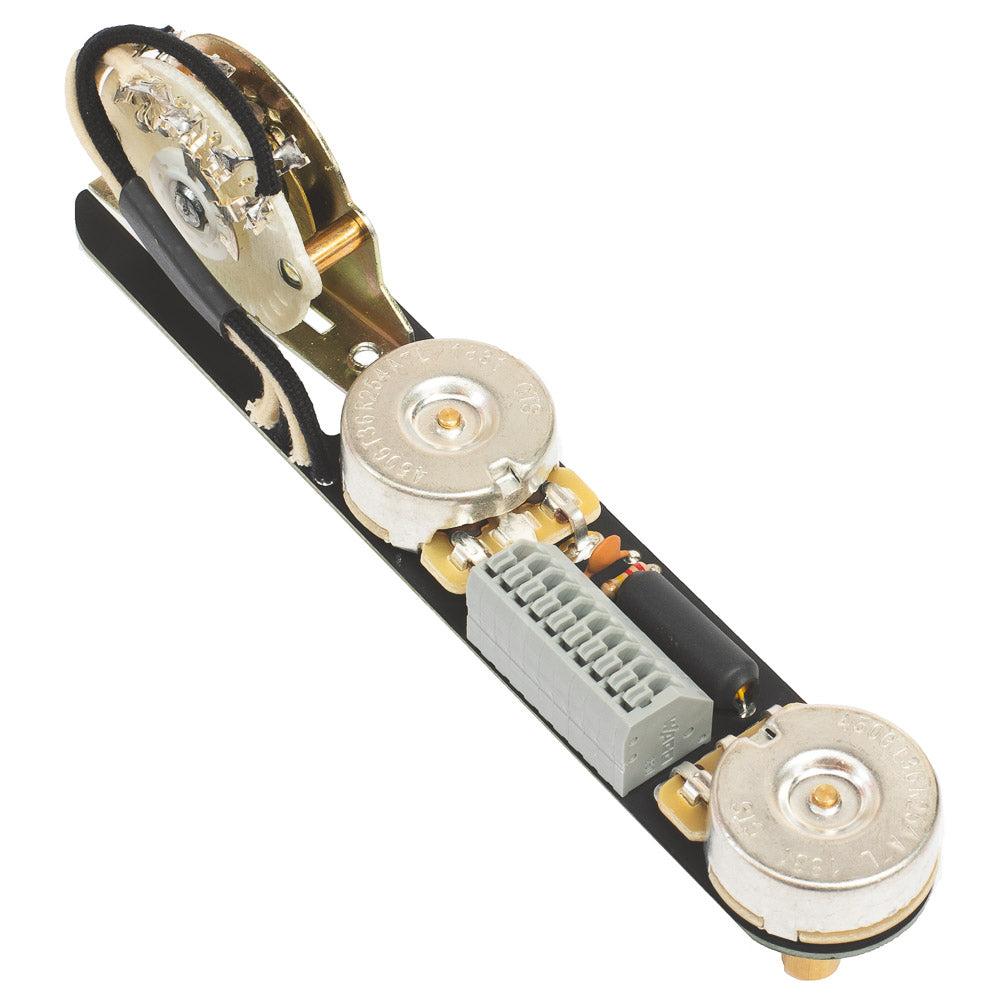
ObsidianWire's Telecaster range uses custom CTS potentiometers, Oak switches, film capacitors and Pro-Wired output jacks.

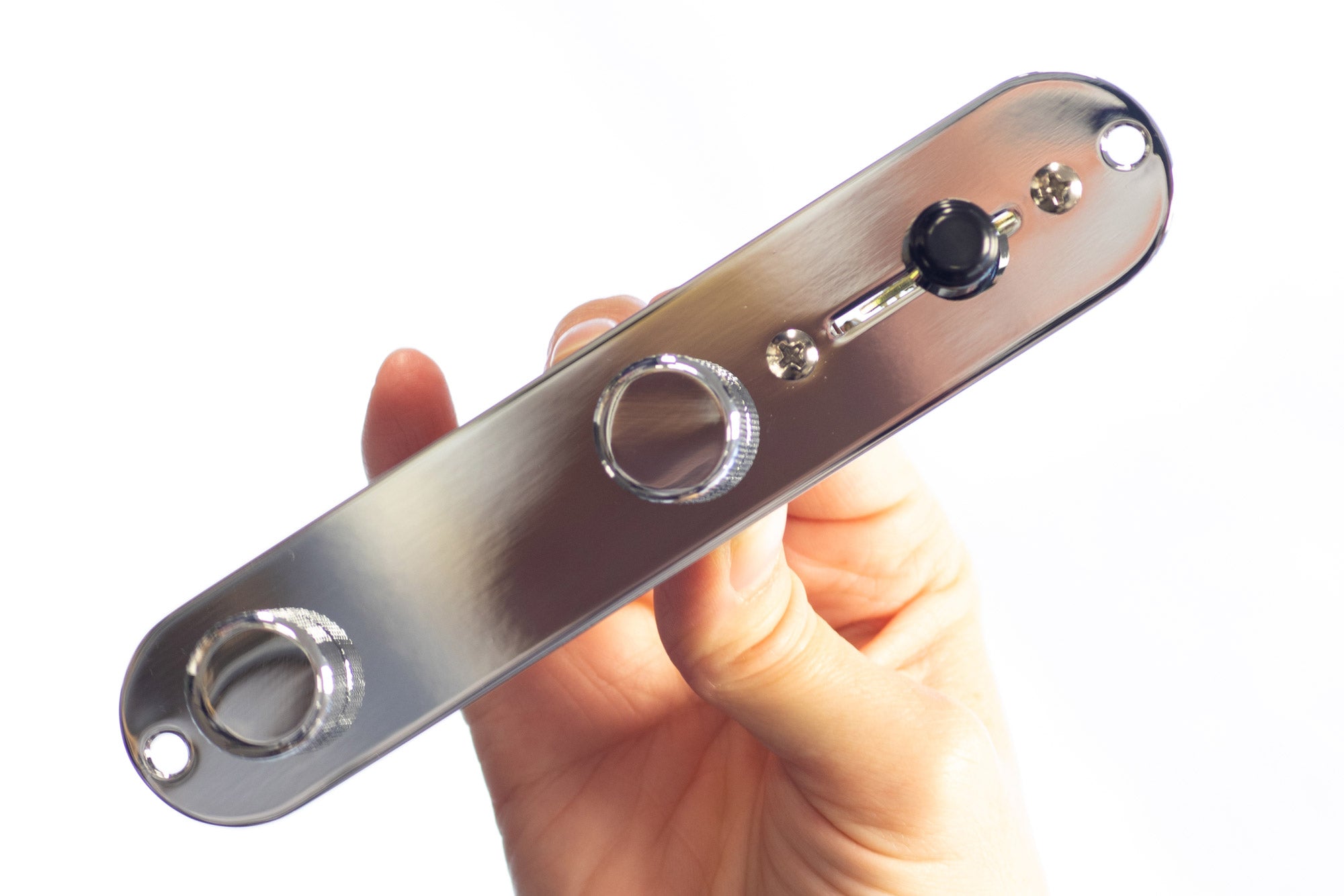
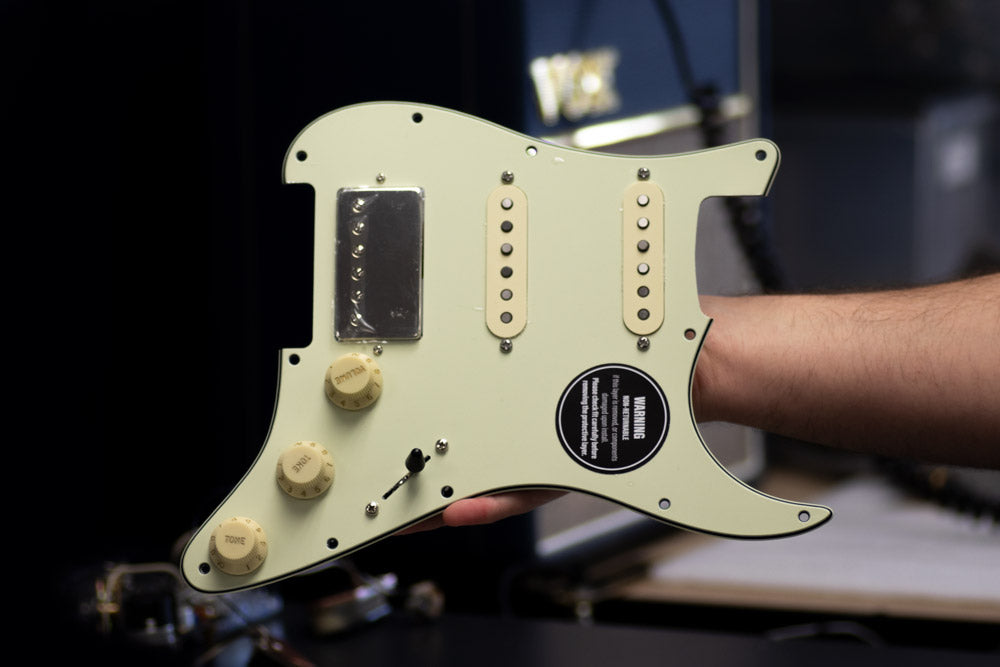
A hand held pre-wired Telecaster control plate with chrome control plate, chrome knobs and a black switch tip.

Loaded Control Plate or Electronics Only?

Upgrading your Telecaster electronics? Choose between a complete loaded control plate or electronics only.

A loaded control plate includes the pre-wired electronics already installed on a new control plate, making it a straightforward way to replace your existing assembly. Electronics-only gives you the same professionally assembled wiring while allowing you to keep your existing control plate and knobs, provided they meet ObsidianWire's required dimensions.

Not sure which option is right for your Telecaster?

What is Vintage 3-way Telecaster wiring?

The traditional Telecaster circuit uses two pickups and a three-way switch.

The three positions are:

1 — Bridge

2 — Bridge + Neck

3 — Neck

This simple arrangement is one of the defining features of the Telecaster.

A good 3-way harness keeps that familiar behaviour while upgrading the underlying electronics and making installation easier.

Vintage 3-Way Tele wiring

ObsidianWire's Vintage 3-Way harness is designed around the traditional Telecaster pickup configuration and switching arrangement.

It's a good option if you love the basic Tele circuit and simply want a cleaner, easier-to-install wiring system.

What is 4-way Telecaster wiring?

One of the most popular Telecaster wiring modifications is the 4-way switch.

Instead of three pickup combinations, you get four.

The additional position places the neck and bridge pickups in series rather than in the traditional parallel configuration.

The result is a thicker, higher-output sound that is often described as being more humbucker-like.

The four positions

With the ObsidianWire Custom 4-Way harness, the switching positions are:

Position 1 — Bridge

Position 2 — Neck + Bridge in parallel

Position 3 — Neck

Position 4 — Neck + Bridge in series

The series position gives the Telecaster a significantly different voice while retaining the traditional bridge, neck and parallel sounds.

  • Why use a 4-way Tele switch?

    The appeal of 4-way wiring is that it adds another useful sound without removing the familiar Telecaster combinations.

    You still have:

    Bridge → Bridge + Neck → Neck

    but gain:

    Neck + Bridge in Series

    The series position combines the two pickups in a different electrical configuration.

    That generally produces a stronger, thicker sound with more output than the traditional parallel combination.

    It can be useful for:

    • Lead parts
    • Heavier rhythm
    • Boosting an amplifier
    • Switching between rhythm and lead sounds
    • Getting a thicker sound without changing pickups

    The ObsidianWire Custom 4-Way also incorporates a treble-bleed circuit and modified control taper.

    Read the Full 4-Way Telecaster Guide
  • Do you need a special neck pickup for 4-way Tele wiring?

    Yes. Or be prepared to solder.

    A traditional Telecaster neck pickup may have its metal cover connected to its ground wire.

    For 4-way switching, the neck pickup cover needs to be electrically separated from the pickup's signal ground.

    That means some two-wire Telecaster neck pickups require a three-wire modification.

    The modification adds a separate ground connection for the metal cover.

    ObsidianWire provides instructions for this modification as part of its 4-way installation documentation.

    If your neck pickup already has three wires, or doesn't have a metal cover requiring separate grounding, the modification may not be necessary.

    Always check the pickup manufacturer's wiring information before modifying a pickup.

What is 7-way Telecaster 'Nashville' wiring?

If four sounds aren't enough, a 7-way Telecaster circuit can add even more pickup combinations.

The Nashville 7-Way configuration uses three single-coil pickups.

It retains the normal switching options while adding combinations that aren't available on a conventional three-pickup Telecaster circuit.

The additional switching allows the neck pickup to be brought into combinations where it wouldn't normally appear.

What does a 7-way Tele give you?

A traditional three-pickup setup can provide:

  • Bridge
  • Bridge + Middle
  • Middle
  • Middle + Neck
  • Neck

A 7-way circuit adds further combinations, including individual pickup combinations that aren't available through the standard five-way arrangement.

ObsidianWire's Nashville 7-Way Tele harness is designed for three single-coil pickups and adds a neck-pickup-on function.

This makes it particularly interesting for players building a Tele with an additional middle pickup.

What is Universal Telecaster wiring?

Not every Telecaster has two traditional single-coil pickups.

Modern Tele builds increasingly use combinations such as:

  • Single coil + humbucker
  • Humbucker + single coil
  • Two humbuckers
  • Coil-splittable humbuckers

That's where a Universal Telecaster wiring harness becomes useful.

ObsidianWire's Custom Universal Tele harness is designed for SS, HS, SH and HH pickup configurations.

Rather than building a harness around one specific pickup arrangement, the Universal system is designed to accommodate a wider range of Telecaster configurations.

  • HSS, HS, SH and HH Telecaster wiring

    SS Tele

    Two traditional single-coil pickups.

    This is the classic Telecaster configuration.

    HS Tele

    Humbucker in one position and a single coil in the other.

    This can provide a more powerful voice while retaining some of the traditional Tele character.

    SH Tele

    The reverse arrangement.

    Useful when you want a humbucker in the neck or another non-standard pickup combination.

    HH Tele

    Two humbuckers.

    This turns the Telecaster into a very different instrument, with the familiar body and ergonomics but a substantially different pickup architecture.

    The Universal harness is designed to accommodate these configurations and can be ordered with an optional coil-split configuration.

  • What does coil splitting do on a Telecaster?

    Coil splitting applies to humbuckers with the appropriate multi-conductor wiring.

    A humbucker normally uses two coils together.

    A coil-split circuit allows one coil to be disconnected, producing a lower-output, single-coil-style configuration.

    The result isn't identical to a purpose-built single-coil pickup, but it can provide another useful tonal option.

    If you're building an HS, SH or HH Tele, coil splitting can therefore make the wiring system considerably more versatile.

    The pickup must have the appropriate wiring for the feature to work.

Traditional vs Solderless Telecaster Wiring

Traditional Telecaster wiring requires soldering each component and connection by hand. Solderless wiring replaces those connections with a simple plug-and-play system, making installation faster, cleaner and easier to reverse or modify.

Traditional: solder every connection.
Solderless: connect, plug in and play.

ObsidianWire solderless harnesses are fully assembled, tested and ready to install — giving you the flexibility to upgrade your Tele without the hassle of traditional wiring.

Solderless vs Traditional Telecaster Wiring

Feature Traditional Wiring Solderless Wiring
Soldering required Yes No
Pickup changes More involved Easier
DIY installation Requires soldering skills Designed for easier installation
Professionally assembled Optional Yes
Custom circuit flexibility Very high Depends on harness
Future pickup changes Usually requires soldering Much easier

Does solderless wiring change the tone?

The fact that a harness is solderless does not inherently make it sound better or worse than a traditional soldered circuit.

The important factors are the circuit design and components.

A wiring harness can affect how the guitar behaves through:

  • Potentiometer value
  • Potentiometer taper
  • Tone capacitor
  • Treble-bleed circuit
  • Pickup loading
  • Switching arrangement
  • Grounding
  • Overall circuit topology

Solderless is primarily an installation and connection system.

The circuit itself is what determines how the electronics behave.

That's an important distinction.

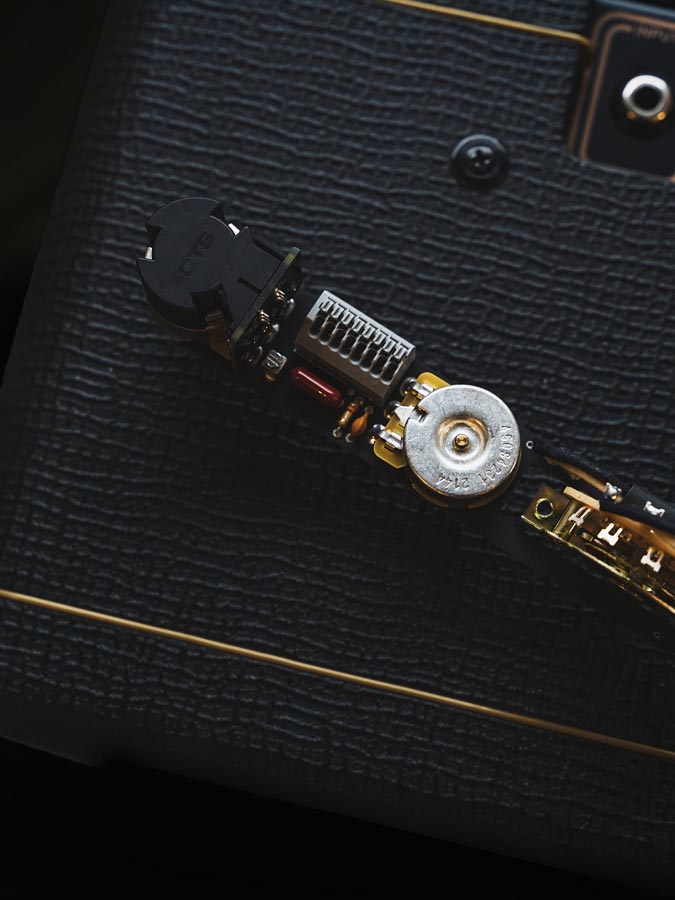
a set of ObsidianWire pro-wired electronics on top of a black Vox AC10 guitar amp.

Can you change Telecaster pickups without soldering?

Yes — provided the pickup and harness are compatible.

This is one of the biggest practical advantages of a solderless Telecaster wiring system.

With conventional wiring, changing a pickup generally means:

  1. Remove the control plate
  2. Heat the soldering iron
  3. Desolder the existing pickup
  4. Install the new pickup
  5. Solder the new connections
  6. Check the circuit
  7. Reassemble the guitar

With a compatible solderless harness, the process can be considerably simpler.

The harness remains installed.

You disconnect the old pickup and connect the replacement.

That makes experimenting with different pickups much less intimidating.

Are solderless guitar wiring harnesses reliable?

A properly designed and assembled solderless system can provide a reliable connection.

The key is the quality of the connectors, components, assembly and installation.

A good harness should also provide secure grounding and strain-free connections.

ObsidianWire's Telecaster installation documentation specifies grounding for the pickup, output jack and other metal components, including bridge and cavity shielding where applicable.

Solderless doesn't mean "temporary."

The goal is to replace manual solder connections with purpose-designed electrical connections.

How difficult is a solderless Telecaster installation?

A solderless installation can be much easier than building a complete Tele circuit from scratch.

But solderless doesn't mean instant.

You still need to:

  • Remove the existing electronics
  • Install the new harness
  • Connect the pickups correctly
  • Connect the grounds
  • Check physical clearance
  • Test the controls
  • Reassemble the guitar

The quality of the installation still matters.

ObsidianWire describes its Tele installation process as "Easy. Not Instant." and provides wiring diagrams, layout information and installation instructions for each harness type.

Can you install a solderless Telecaster harness yourself?

Yes.

A solderless harness is specifically designed to make installation more accessible to guitarists who don't want to build or modify a circuit with a soldering iron.

However, you should still be comfortable with basic guitar maintenance.

You'll need to be able to:

  • Remove the control plate
  • Identify pickup wires
  • Route wires correctly
  • Secure the controls
  • Make ground connections
  • Test the guitar before final assembly

If you're comfortable changing strings, adjusting pickups and doing basic guitar maintenance, a solderless harness can be a much more approachable electronics upgrade than conventional wiring.

Will an ObsidianWire harness fit my Telecaster?

ObsidianWire Telecaster harnesses are designed to fit a wide range of Fender Telecasters and compatible guitars, but Telecaster dimensions aren't completely universal. Control-plate size, mounting-hole spacing, pot-hole diameter and cavity dimensions can vary between models and manufacturers.

Fender Telecasters

Most standard Fender USA and Mexico-made Telecasters are compatible with our Telecaster harnesses. Some models may use different control plates or control layouts, so it's important to check the specifications for the harness you're considering.

Squier & Other Tele-Style Guitars

For the easiest install, select a Telecaster Loaded Control Plate

Many Squier and other Tele-style guitars can be fitted with an ObsidianWire harness, but metric control holes and different control-plate dimensions may require modifications or replacement hardware.

Before ordering, check:

  • Control plate dimensions and mounting-hole spacing
  • Control-hole diameter
  • Pot and switch clearance
  • Available cavity depth
  • Pickup configuration
  • Knob compatibility

Not sure if it will fit? Send us your exact guitar model and we can help you check compatibility.

Solderless Telecaster wiring FAQs

What is solderless Telecaster wiring?


Solderless Telecaster wiring uses purpose-designed connectors and a professionally assembled harness instead of requiring you to solder the main circuit yourself.

Can I change Telecaster pickups without soldering?


Yes, most pickups are compatible with the solderless harness. This is one of the main advantages of a solderless system.

What is 4-way Telecaster wiring?


4-way Telecaster wiring adds a fourth switch position that places the neck and bridge pickups in series, creating a thicker, higher-output sound.

Does 4-way Tele wiring sound like a humbucker?


The series combination produces a thicker, higher-output sound with some characteristics associated with a humbucker, but it is not identical to a conventional humbucker.

Do I need to modify my Tele neck pickup for 4-way wiring?


Some traditional two-wire neck pickups with metal covers require a separate cover ground for 4-way switching. Check your pickup's construction before installation.

What is 7-way Telecaster wiring?


A 7-way Telecaster circuit adds additional pickup combinations to a three-pickup Telecaster, including combinations enabled by switching the neck pickup into the circuit.

Can I use humbuckers with solderless Tele wiring?


Not simply because it is solderless. The circuit design and components are more important to how the guitar behaves.

Does solderless wiring sound different from soldered wiring?


A properly designed and installed solderless system can provide reliable electrical connections. Connector quality, grounding and installation all matter.

Will a solderless harness fit my Squier Telecaster?

It depends on the specific guitar and harness. Squier and other metric-spec Telecasters can have different control-plate and hardware dimensions.

We recommend a Full Loaded Control plate for an easy install

Can I install a Telecaster wiring harness myself?


Yes. Solderless systems are designed to simplify installation, although you still need to identify the pickup wires, make the correct connections and check physical compatibility.

Expore More

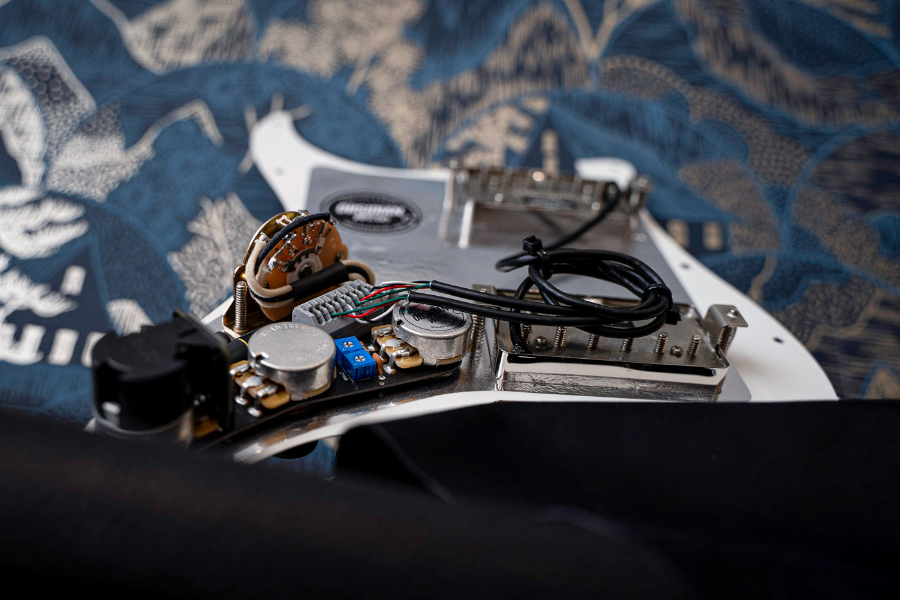
A fully loaded HH Stratocaster pickguard using an ObsidianWire Solder-less wiring harness

Premium Solder-less Guitar Wiring

About ObsidianWire®

ObsidianWire® makes premium, Pro-Wired & solderless guitar wiring harnesses designed to make upgrading your guitar easier. From Stratocaster and Telecaster wiring to Les Paul and custom configurations, ObsidianWire combines quality components, clever circuit design and solderless installation to help guitarists

Plug, Play & Enjoy™.